
Last updated November 2, 2026
 Sweep & inspection
 Caps & crowns
 Flue relining
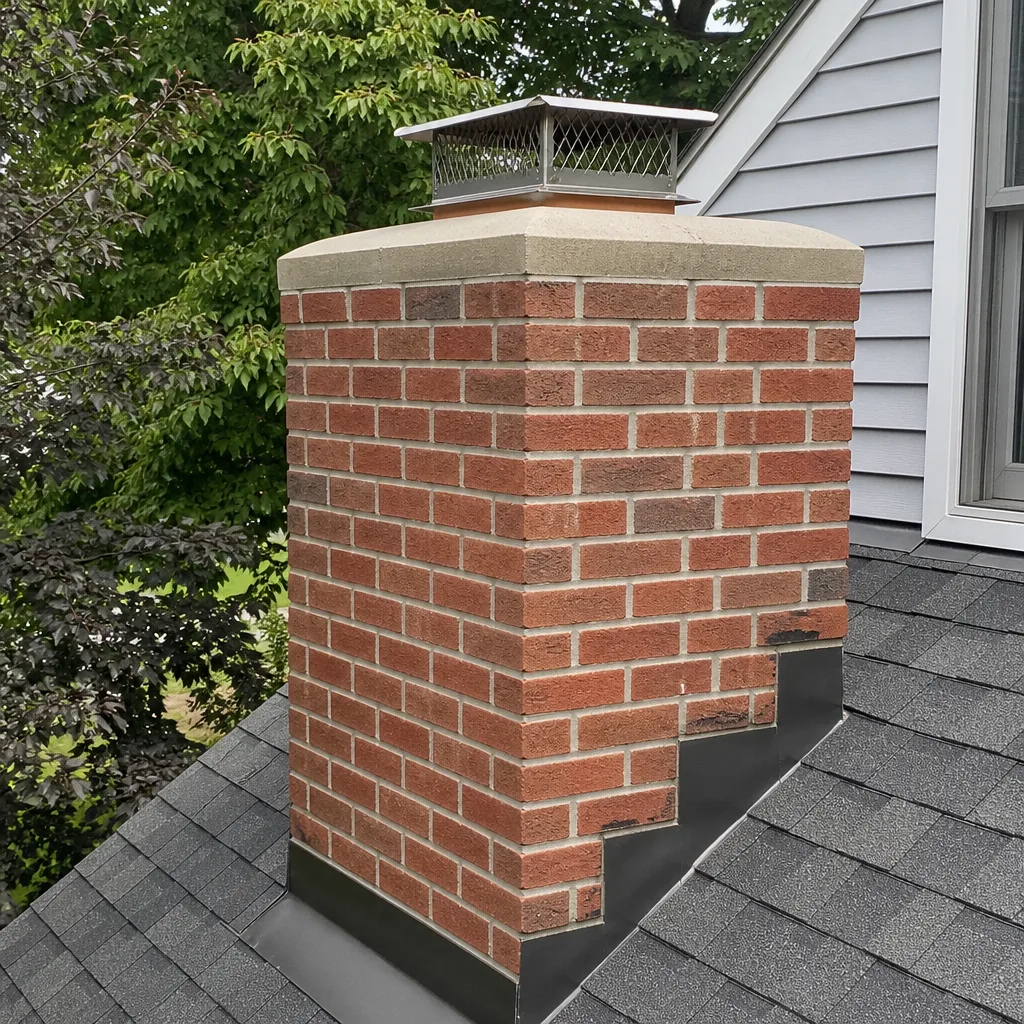 Masonry repair
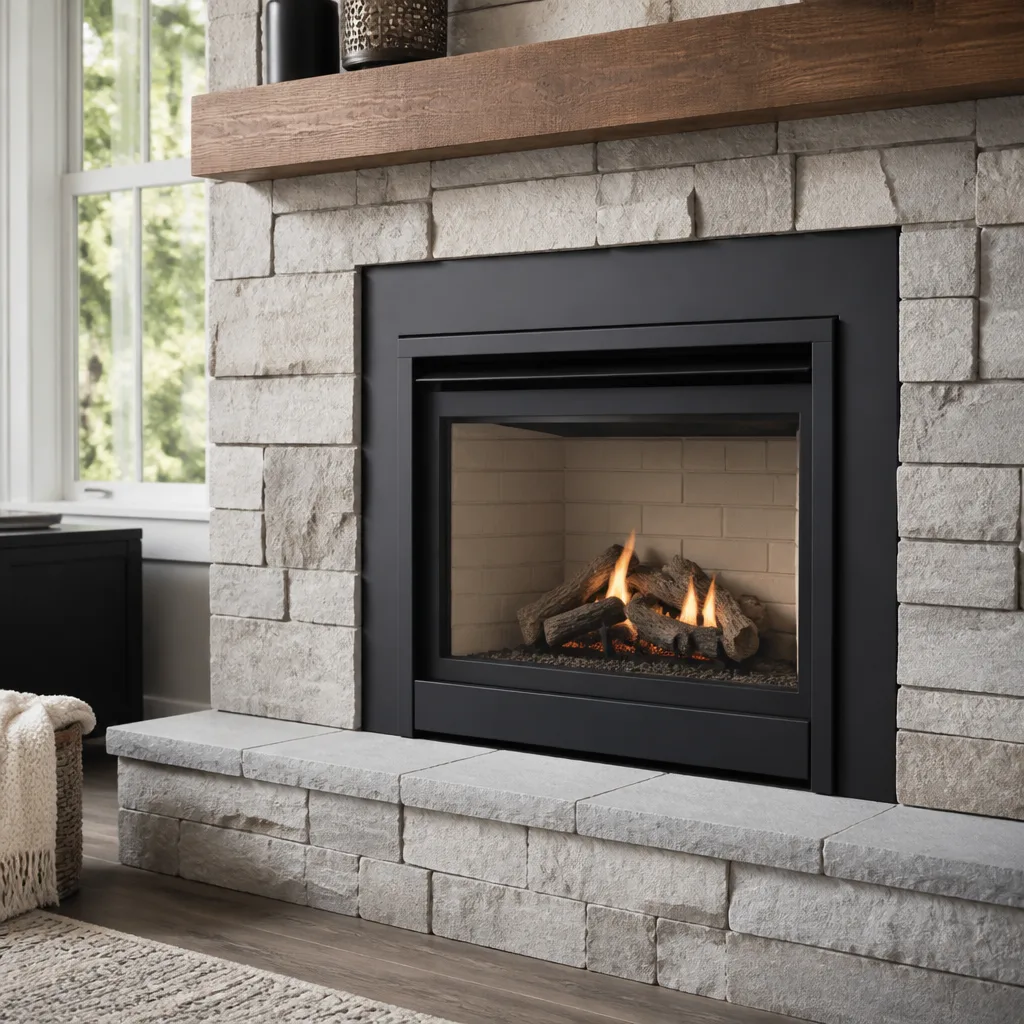 Gas fireplace service
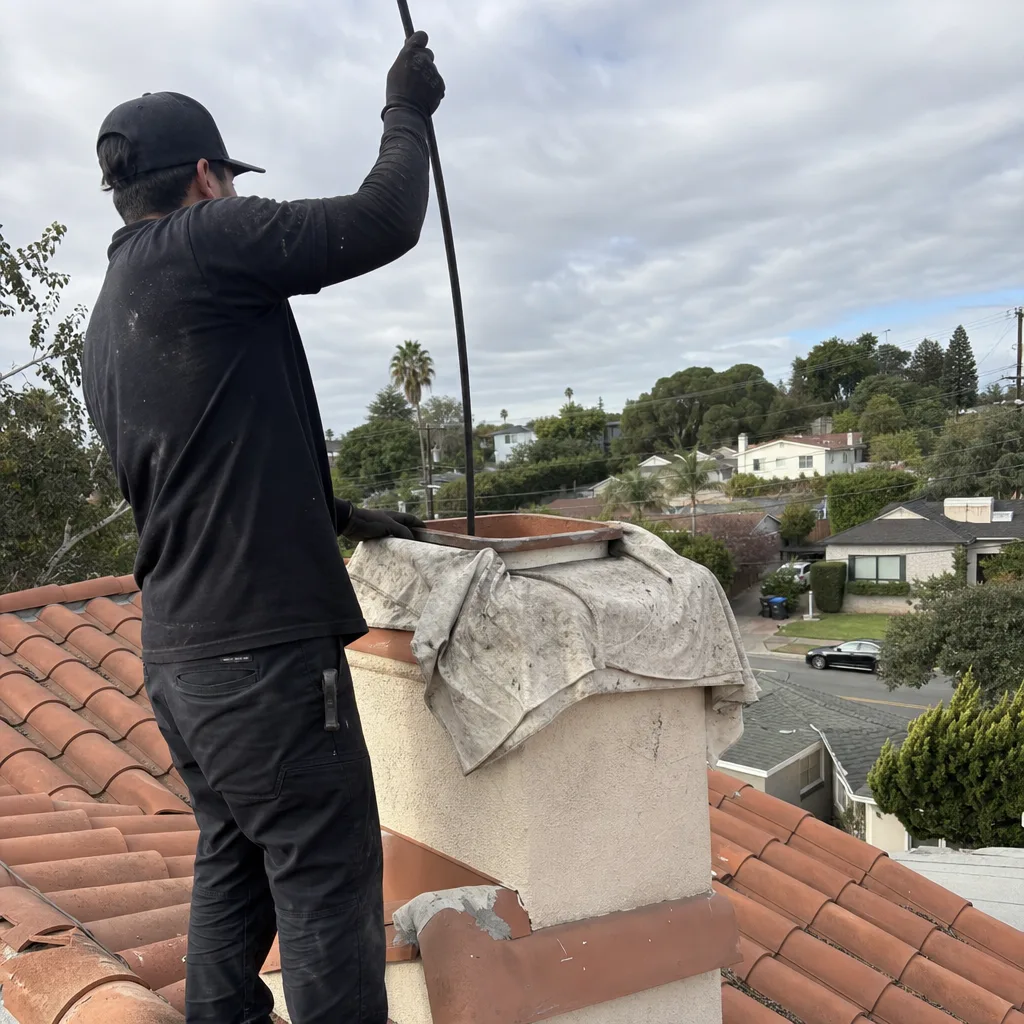
Level 1 sweep and inspection to the NFPA 211 annual standard - flue, crown, cap, and flashing checked and photographed
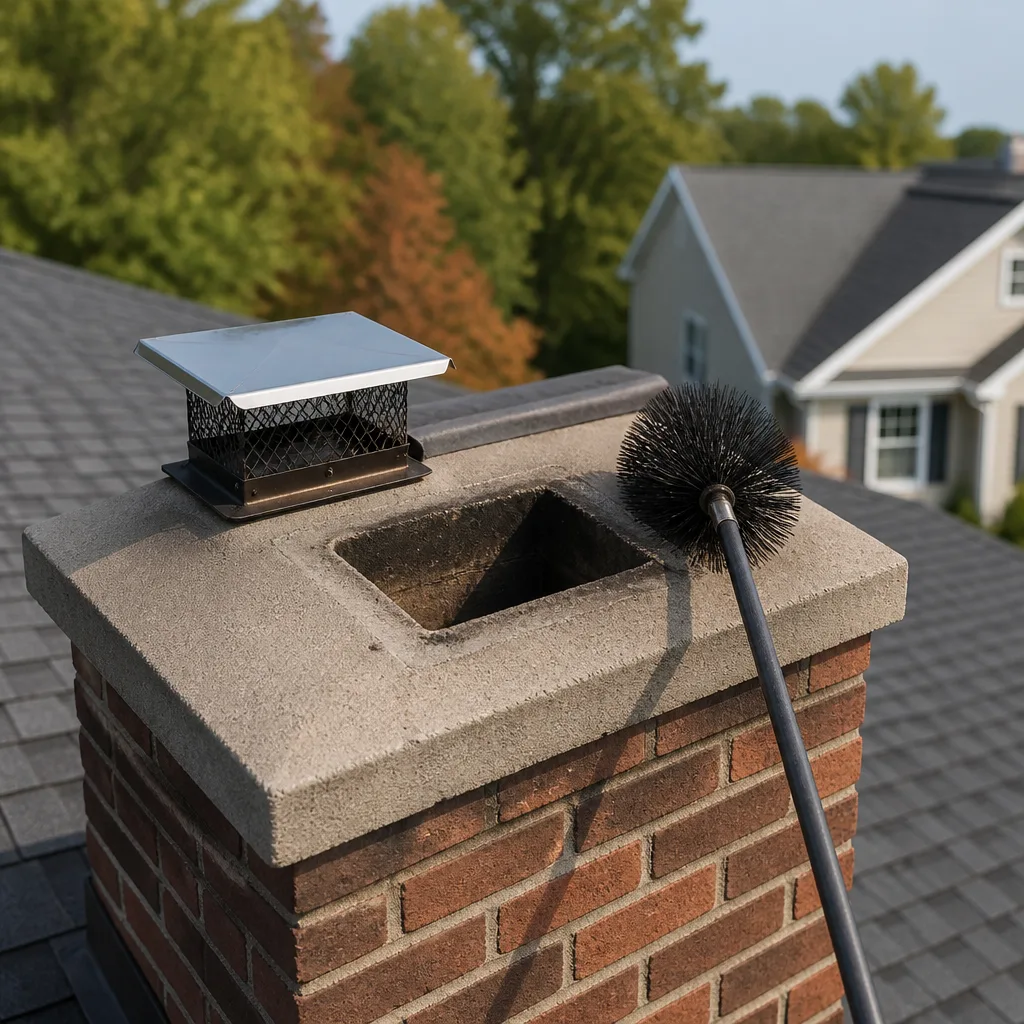
Chimney sweep logs do not sweep chimneys. They loosen some creosote - which then falls where a brush and vacuum still have to collect it.
Chimney Cleaning Emergency Preparedness Guide for Atwater Village Homes
Atwater Village sits within a few miles of two active fault systems. A moderate earthquake can crack a chimney liner without any visible exterior damage, and the only way to know is a post-event inspection, which most homeowners never schedule. This guide gives you a working emergency plan for the three scenarios most likely in this neighborhood: a chimney fire, a carbon monoxide event tied to venting failure, and post-earthquake structural compromise. You’ll learn the correct sequence of actions for each, what to have ready before anything happens, and when a problem can wait versus when it cannot. If you own a home in Atwater Village with a fireplace, gas insert, or wood stove, this is the plan you hope you never need but should already have.
Quick Answer
Chimney emergency preparedness for Atwater Village homes means having a pre-made response plan for flue fires, carbon monoxide events, and post-earthquake damage. The core of that plan is simple: know your damper position, know your gas shut-off location, keep a working CO detector on every floor, and have a trusted chimney professional’s number saved before a problem occurs. After any chimney fire or significant seismic event, stop using the fireplace and schedule a professional chimney inspection before the next burn.
Styles & brands we work with
- Sweep & inspection
- Caps & crowns
- Flue relining
- Masonry repair
- Gas fireplace service
Table of Contents
- What to Do in the First 90 Seconds of a Chimney Fire
- Carbon Monoxide: Chimney-Specific Warning Signs and the Evacuate-Versus-Ventilate Decision
- Post-Earthquake Chimney Inspection: What to Check Before You Burn Again
- Wildfire Ash, Embers, and Your Uncapped Flue: What Southern California Smoke Season Means for Chimneys
- Building a Chimney Emergency Kit: What Actually Belongs in It
- The Pre-Season Baseline: How a Routine Sweep Becomes Your Emergency Foundation
- What You Can Safely Check Yourself (and What You Should Never Touch)
What to Do in the First 90 Seconds of a Chimney Fire
A chimney fire announces itself. The sound is often described as a freight train or a low rumble coming from the flue, sometimes accompanied by popping or cracking. You may see flames or dense smoke from the chimney top, or an intense, glowing heat from inside the firebox. What you do in the next minute and a half determines whether this stays a flue event or becomes a structure fire.
The first instinct for many homeowners is to open the damper fully, assuming more air will help. That instinct is wrong. An open damper feeds oxygen to a fire already burning inside your chimney, intensifying it. Here is the correct sequence:
- Close the damper if you can do so safely. This cuts the oxygen supply to the flue fire. If the damper handle is already too hot to touch, do not reach for it.
- Close the fireplace doors or glass screen. This further starves the fire of air and contains embers inside the firebox.
- Do not throw water into the firebox. Thermal shock can crack the firebrick and the masonry, turning a contained flue fire into a structural breach. Water also produces steam that can carry burning creosote particles into the room.
- Evacuate everyone from the house immediately. Do not collect belongings. Do not linger to watch the chimney.
- Call 911 from outside the house. Tell the dispatcher you have a chimney fire. Do not call a chimney sweep first. The fire department’s job is to make sure the fire has not spread to the attic, roof, or walls.
- Once the fire department clears the scene, call a certified chimney professional before the fireplace is used again. A chimney fire can crack the flue liner, separate flue tiles, and compromise the mortar joints, none of which you can see without a camera inspection.
In our experience, the homeowners who handle chimney fires best are the ones who already know where their damper handle is and what position it sits in. In many Atwater Village homes with 1920s and 1930s construction, dampers are original equipment and can be stiff or rusted. Knowing the feel of your damper now, before you need to close it under stress, is a small act of preparation that pays off enormously.
After a chimney fire, the system cannot be certified safe by visual inspection alone. Even a fire that burned itself out in minutes can leave hairline cracks in a clay liner. Those cracks allow heat and combustion gases to reach the wood framing around the chimney chase. We always recommend a camera inspection after any flue fire event, no matter how minor it looked from outside. And if the liner is compromised, repair options like HeatShield liner resurfacing can restore the flue without a full tear-out. But that decision comes only after the inspection tells us exactly what happened.
Carbon Monoxide: Chimney-Specific Warning Signs and the Evacuate-Versus-Ventilate Decision
Carbon monoxide from a chimney or venting failure behaves differently than CO from a furnace or range. The symptoms are similar: headache, nausea, dizziness, confusion, fatigue that improves when you leave the house and worsens when you return. But the mechanism is worth understanding, because it tells you what to do.
When a furnace produces CO, it’s usually a combustion problem at the appliance. When a chimney produces CO, the appliance may be burning fine, but the exhaust has nowhere safe to go. A blocked flue, a collapsed liner, a bird nest, or a damper partially closed against a gas log set can all force combustion gases back into the living space. The CO is not the only gas coming back, either. Sulfur dioxide, nitrogen oxides, and water vapor all come with it, which is why homeowners sometimes smell an acrid, burnt smell with no visible smoke.
Evacuate versus ventilate is not a judgment call you should make in the moment. Here is the rule we tell every homeowner we work with in Atwater Village:
- If your CO detector is sounding, evacuate. Do not open windows and wait. Do not try to find the source. Get everyone outside and call 911. The fire department carries gas detection equipment and will confirm whether the house is safe to re-enter.
- If you smell something odd but no alarm is sounding, ventilate and investigate. Open windows on opposite sides of the house to create cross-flow. Shut down the fireplace or gas appliance. Then call a professional. A smell without an alarm does not mean there is no CO, but it often means the CO level is below your detector’s threshold while other combustion byproducts are noticeable.
- If anyone in the house has headache, nausea, or confusion, evacuate regardless of the detector. Detectors fail. Batteries die. Sensors age out. Symptoms are the most reliable warning system you have, and they should never be overridden by a silent alarm.
One pattern we see in Atwater Village’s older housing stock is rusted-out flue connectors on natural-draft water heaters venting through the same masonry chimney as the fireplace. The water heater appears fine, the fireplace appears fine, but the shared flue has deteriorated where the two appliances connect. CO from the water heater then enters the home not through the living room, but through a closet or utility room. This is a strong argument for having both systems evaluated by someone who thinks about the complete venting path, not just the firebox.
Placement matters for CO detectors. Ideally, you have one on every sleeping floor, mounted within 10 feet of bedroom doors. For homes with gas fireplaces, a detector in the same room as the fireplace is recommended. And for homes with gas dryers, the laundry area deserves one too. A working CO detector is the single most effective piece of emergency equipment you can own, and it costs less than a pizza delivery order. Dryer vent cleaning is a related but separate hazard we address because combustion safety extends well beyond the chimney.
Post-Earthquake Chimney Inspection: What to Check Before You Burn Again
The San Gabriel Valley and the Los Angeles basin will experience another significant earthquake. That’s not speculation; it’s the consensus of every seismologist who studies this region. And when it happens, Atwater Village’s mix of 1920s through 1950s masonry chimneys will be at the front of the damage curve.
Here’s what actually happens when the ground shakes hard. The house and the chimney move at different frequencies. The house, being wood-framed, flexes. The chimney, being rigid masonry, resists. The stress concentrates at the roofline, where the chimney emerges from the structure, and at the firebox, where the masonry is tied to the foundation. This is why chimneys shear at the roofline in earthquakes, and why liners crack in ways that are invisible from the hearth.
After a quake of magnitude 4.5 or greater, we recommend the following sequence before you use your fireplace again:
- Inspect from the ground first. Look for cracks in the exterior masonry, especially near the roofline. Look for separation between the chimney and the house. Look for pieces of brick or mortar on the ground or roof. Use binoculars if the chimney is tall. Do not climb on the roof.
- Check the firebox interior. Shine a flashlight up the flue from the firebox. Look for fallen debris, visible cracks in the flue tiles, or a shifted damper plate. A flashlight only shows you the first few feet, but anything obvious at that level is a hard stop.
- Check the attic space around the chimney chase. If you can access your attic safely, look for daylight coming through cracks in the chimney structure, signs of displaced framing, or dust and debris on the attic floor near the chimney.
- Check for new spalling or efflorescence on interior chimney walls. When moisture moves through cracked masonry and evaporates, it leaves white mineral deposits. These can appear after a quake as a sign of new fractures.
- Do not rebuild or patch anything yourself. Cosmetic patching hides damage. It does not fix it. If you see any of these signs, the chimney is out of service until a Level 2 inspection is complete.
A Level 2 inspection is the standard recommended by the National Fire Protection Association after any event likely to have damaged the chimney: an earthquake, a chimney fire, a lightning strike, or a change in fuel type. It includes a camera scan of the flue interior, an exterior examination, and a check of the firebox, smoke chamber, and clearances. This is not a visual once-over. It’s the diagnostic that tells you whether your chimney is safe to operate.
For homeowners in Atwater Village, there’s a practical urgency here. Seismic retrofitting requirements for chimneys in Los Angeles have tightened over the years, and older chimneys built before modern reinforcement standards are at the highest risk. After a quake, a chimney can look fine from the street and be structurally incapable of containing a fire. The cost of an inspection is a fraction of what a flue fire or a CO event costs once you factor in property damage, insurance claims, and danger to your family. If you’re looking for a baseline resource, the Pearl Chimney Cleaning home page outlines the full inspection process we use.
Wildfire Ash, Embers, and Your Uncapped Flue: What Southern California Smoke Season Means for Chimneys
Atwater Village does not sit in the brush, but it sits downwind of enough of it that wildfire smoke events are now a regular part of late summer and fall. Ash and embers travel farther than most people realize. An ember can ride a wind column for a mile or more before landing. An uncapped or compromised flue is an open invitation for that ember to find its way into a creosote-coated smoke chamber.
But even without ember intrusion, smoke events create a specific problem for chimneys: fine ash deposition on the flue walls. This ash is chemically different from the ash produced by a normal wood fire in your fireplace. It’s finer, more abundant, and often mixed with whatever the wildfire consumed, which can include plastics, treated lumber, and other materials that leave acidic residues. When that ash combines with existing creosote and the normal humidity in a flue, it forms a corrosive paste that accelerates liner deterioration.
After a significant smoke event in the Los Angeles area, we recommend these steps:
- Check the ground and roof adjacent to your chimney for ash accumulation. If your patio furniture is dusted with ash, your chimney crown and cap area almost certainly are too.
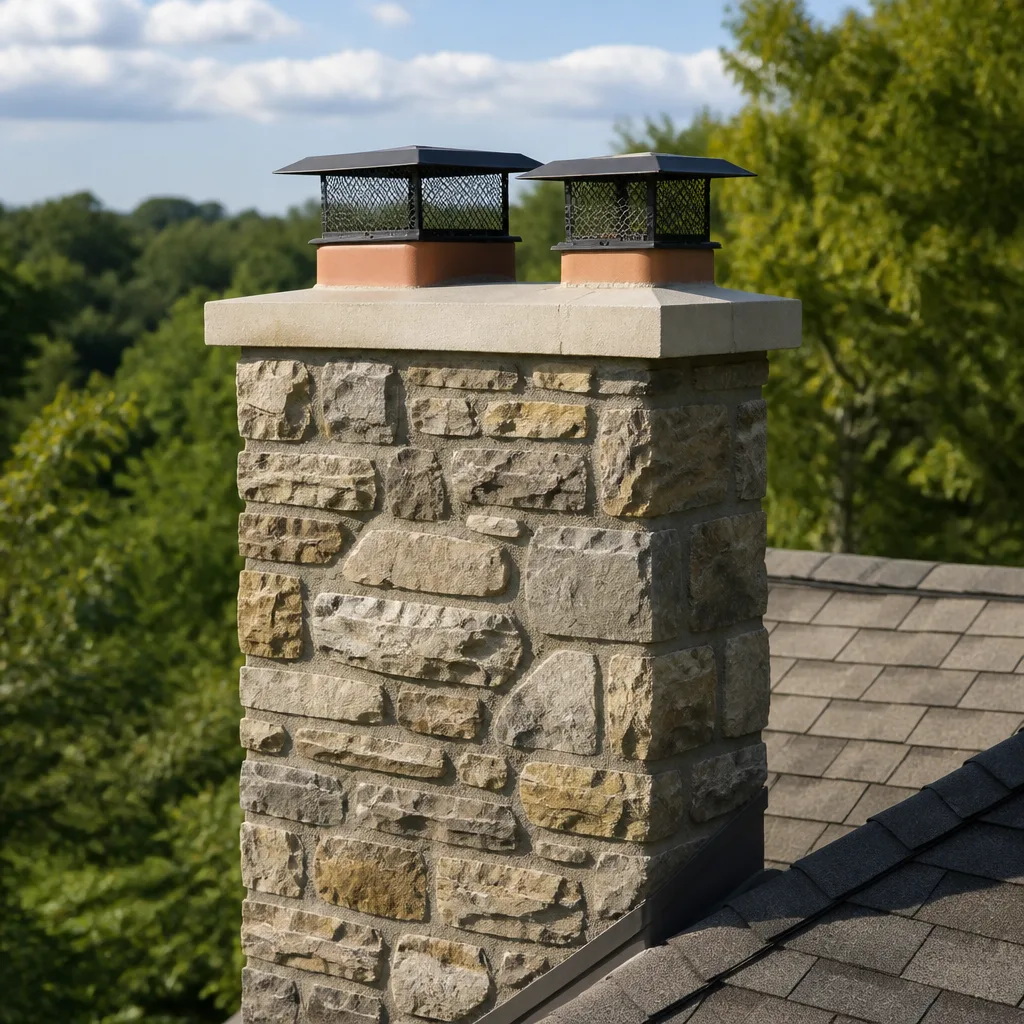
- Look at your chimney cap. If you don’t have one, or if the existing cap is damaged, wind-driven ash has had direct access to your flue. An Atwater Village chimney sweep can assess whether the cap needs replacement or if the ash is confined to areas where it can be safely removed.
- Do not burn your fireplace to “clean out” the ash. Burning does not remove ash. It bakes it into the creosote, making it harder to remove later and creating a more flammable residue in the meantime.
- Schedule a sweep if you burned during fire season or if you notice any smoke smell in the house when the fireplace is not in use. A smoke smell without a fire is often the first sign of ash-blocked airflow or a negative-pressure condition that’s pulling flue residue into the home.
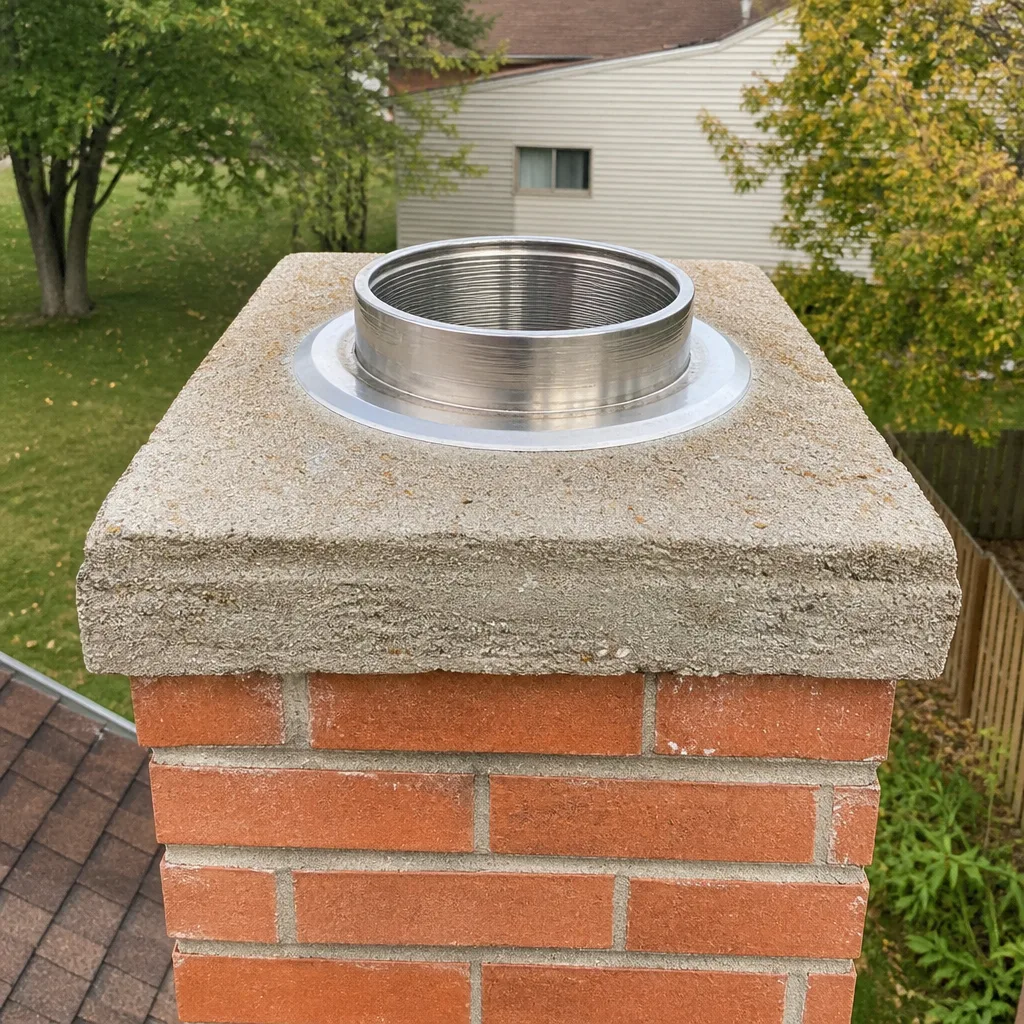
For homes in Atwater Village with older masonry chimneys, we also recommend checking the chimney crown after fire season. The heat from prolonged exposure to wildfire-adjacent conditions, combined with the dry Santa Ana winds, can widen existing hairline cracks in the crown. Crown cracks let water into the masonry system, and water is the quiet destroyer of chimneys in Southern California. It freezes rarely but expands aggressively in the heat, and over years it works mortar joints apart. A cracked crown is a 30-minute repair if caught early and a multi-thousand-dollar rebuild if ignored.
Building a Chimney Emergency Kit: What Actually Belongs in It
Most emergency preparedness checklists treat the chimney as an afterthought. The standard earthquake kit has water, flashlights, batteries, first-aid supplies, and rarely anything related to the combustion systems in your home. We think that’s a gap worth closing. Your chimney and venting systems are part of your house’s mechanical infrastructure, and they deserve the same preparation as your gas line or your electrical panel.
Here’s what we recommend every Atwater Village household keep accessible, ideally in a labeled small box or zippered bag near the fireplace or in a utility closet:
- A working carbon monoxide detector with fresh batteries, plus a spare set. If you already have detectors installed, this is your backup or your replacement trigger. Write the install date on the detector with a marker.
- A damper position diagram. A simple hand-drawn sketch showing which direction the handle moves to open or close the damper. In an emergency, fine motor control erodes. A diagram removes the guesswork. Tape it inside a kitchen cabinet door near the fireplace.
- Your gas shut-off access path, written down. For homes with gas fireplaces, gas log sets, or gas water heaters venting through the chimney, know where the gas meter is and where the appliance shut-off valves are located. Write down the wrench size needed for the meter shut-off and keep that wrench in the kit.
- Your chimney professional’s phone number, written on paper. Not saved in a phone. Written on paper. In an emergency, phones die, get lost, or get locked. A laminated index card costs $2.
- Fire extinguisher rated for Class A fires, kept within reach of the fireplace but not directly next to it. A Class A extinguisher handles wood, paper, and standard combustibles. For a chimney fire, the extinguisher is a backup for any material that escapes the firebox, not a tool for fighting the flue fire itself.
- A flashlight with fresh batteries, kept in the same location. When the power is out and you need to check the flue from the firebox, your phone flashlight is not the tool you want to rely on.
In our experience, the families who actually build this kit are the ones who run a small drill: every fall, when the clocks change, swap the kit batteries, test the CO detector, and walk through the damper diagram with every person in the house old enough to operate the fireplace. It takes ten minutes once a year. That ten minutes is the difference between a rehearsed response and a panicked one.
The Pre-Season Baseline: How a Routine Sweep Becomes Your Emergency Foundation
Emergency preparedness is built on a baseline. You cannot effectively respond to a chimney crisis if you don’t know what your chimney looks like when it’s healthy. The most practical step any Atwater Village homeowner can take is to have a baseline inspection done before the burning season, before the rains come, and before any emergency forces your hand.
A proper sweep at the start of the season does more than remove creosote. It establishes three things that matter during an emergency:
First, it documents the condition of your liner, crown, damper, and smoke chamber. If a fire or earthquake damages any of these later, you have a baseline report that shows what changed. Insurance claims are easier with documentation. Emergency decisions are faster when you know what the system looked like before the event.
Second, it removes the fuel that turns a small chimney event into a catastrophic one. Creosote is the accelerant in a chimney fire. A clean flue can still have a fire, but the fire has far less fuel to sustain itself. The difference between a 30-second flue event and a sustained burn is often the amount of creosote present when the fire starts.
Third, it gives you an existing relationship with a professional who knows your system. When you call after an earthquake or a fire event, a company that has already inspected your chimney can tell you what’s likely to be damaged, what’s urgent, and what can wait. They know the configuration of your flue, the type of liner, and the quirks of your damper. That context saves time when time matters.
We work with professional-grade components from brands like DuraFlex, HeatShield, and Olympia Chimney because the emergency response plan is only as good as the parts that survive the emergency. A liner system that’s rated for the temperatures a chimney fire produces is a different thing than a hardware store patch. A HeatShield resurfacing job restores a compromised clay liner without a full rebuild. A DuraFlex stainless liner provides a continuous, insulated flue path that won’t separate at the tile joints the way traditional masonry liners can. These are the materials we install because, when something goes wrong, the margin for error is thin.
If you haven’t had a sweep in the last year, that’s your first action item. Not as an emergency response, but as an emergency foundation. Chimney Sweep in Atwater Village covers what a full service includes, and it’s the right starting point for any home where the last inspection date is unknown.
What You Can Safely Check Yourself (and What You Should Never Touch)
We’re often asked what homeowners can do themselves when it comes to chimney maintenance and emergency preparedness. There’s a clear line between safe observation and dangerous intervention, and we want to be equally clear about both sides of it.
What you can safely check yourself:
- Apply visual inspections from the ground after storms, earthquakes, or fire season. Look for missing bricks, cracked mortar, a shifted cap, or debris around the chimney base. Use binoculars if needed. You are looking, not climbing.
- Check the damper operation when the fireplace is cold. Open and close it. Note its position, how the handle moves, and whether it seats fully. If it’s rusted, stuck, or loose, note that too and mention it during your next service call.
- Check for water stains on the ceiling or walls near the chimney. After heavy rain, look for discoloration that could indicate a flashing leak or crown failure. Water stains near a chimney are a sign the waterproofing has been breached.
- Observe how your fireplace behaves during a normal burn. You’re watching for smoke rollback into the room, unusual smells, or excessive buildup on the glass doors. These observations are diagnostic gold when you describe them to a professional.
What you should never do yourself:
- Never attempt to clean the flue from the top down without proper training and equipment. A fall from a ladder or roof is a life-altering or life-ending event. The risk is not worth the saved cost of a professional sweep.
- Never apply a chemical creosote remover or a “creosote burning log” as your primary cleaning method. These products are supplements at best, not substitutes for mechanical removal. They can give a false sense of security without removing the actual creosote buildup.
- Never repair a cracked liner, deteriorated mortar joint, or damaged crown with caulk, spray foam, or any product not designed for chimney use. The materials are wrong, the temperatures are wrong, and the failure mode of a patched flue is worse than the problem you started with.
- Never attempt to reline a flue, replace a damper, or rebuild any part of the chimney structure as a DIY project. These are code-governed, safety-critical systems. The clearance-to-combustibles requirements alone are beyond the scope of any reasonable homeowner project.
The pattern here is that observation is safe and intervention is not. Your job as a homeowner is to notice changes and report them. The professional’s job is to diagnose and fix. We’d rather get a call about something that turns out to be nothing than have you discover it was something after the damage is done.
Common Mistakes to Avoid
- Opening the damper during a chimney fire. This adds oxygen to the flue fire and makes it burn hotter. Close the damper if the handle is safe to touch, then evacuate and call 911.
- Assuming a small earthquake means the chimney is fine. Hairline liner cracks are invisible from the ground and often invisible from the attic. After a magnitude 4.5 or greater, the only responsible test is a camera inspection.
- Treating CO symptoms as the flu. If headaches and nausea appear at home and improve when you’re away, that’s a CO pattern, not a coincidence. Evacuate and have the venting systems checked before returning.
- Skipping the chimney cap because “it’s never had one.” An uncapped flue invites rain, birds, debris, and embers. In wildfire-prone Southern California, an uncapped flue is an open channel to the most vulnerable part of your chimney.
- Using the fireplace to burn off ash after a smoke event. Burning bakes fine ash into the creosote, creating a more flammable and harder-to-remove residue. Sweep first, burn later.
- Patching visible chimney cracks with caulk or concrete. This hides the symptom while the structural problem continues. A cracked crown, spalling brick, or separated mortar joint needs professional repair with materials designed for high-heat, high-exposure conditions.
- Assuming the chimney sweep and the dryer vent are unrelated. Both are exhaust paths for combustion gases. A house with a clean chimney and a clogged dryer vent still has a combustion hazard. Treat the fireplace and the laundry room as one system.
See the difference
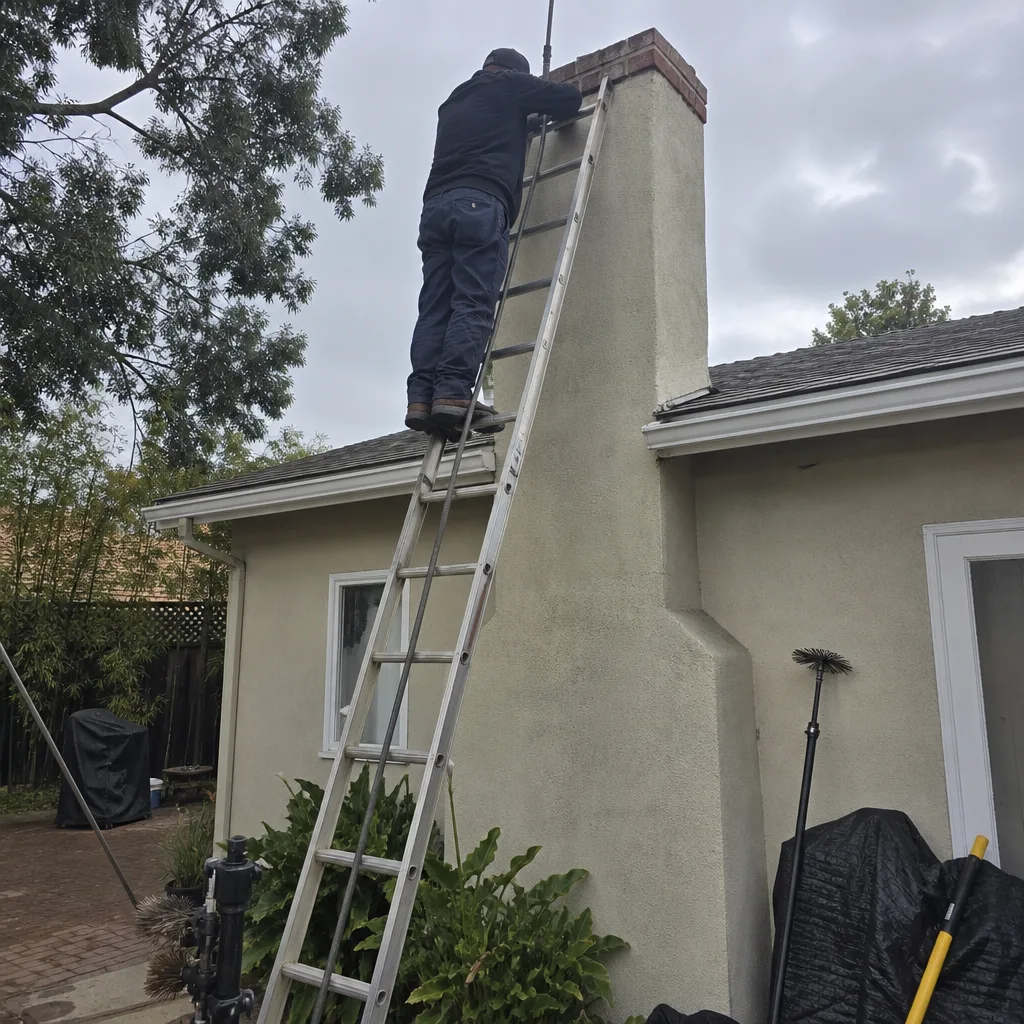 Before
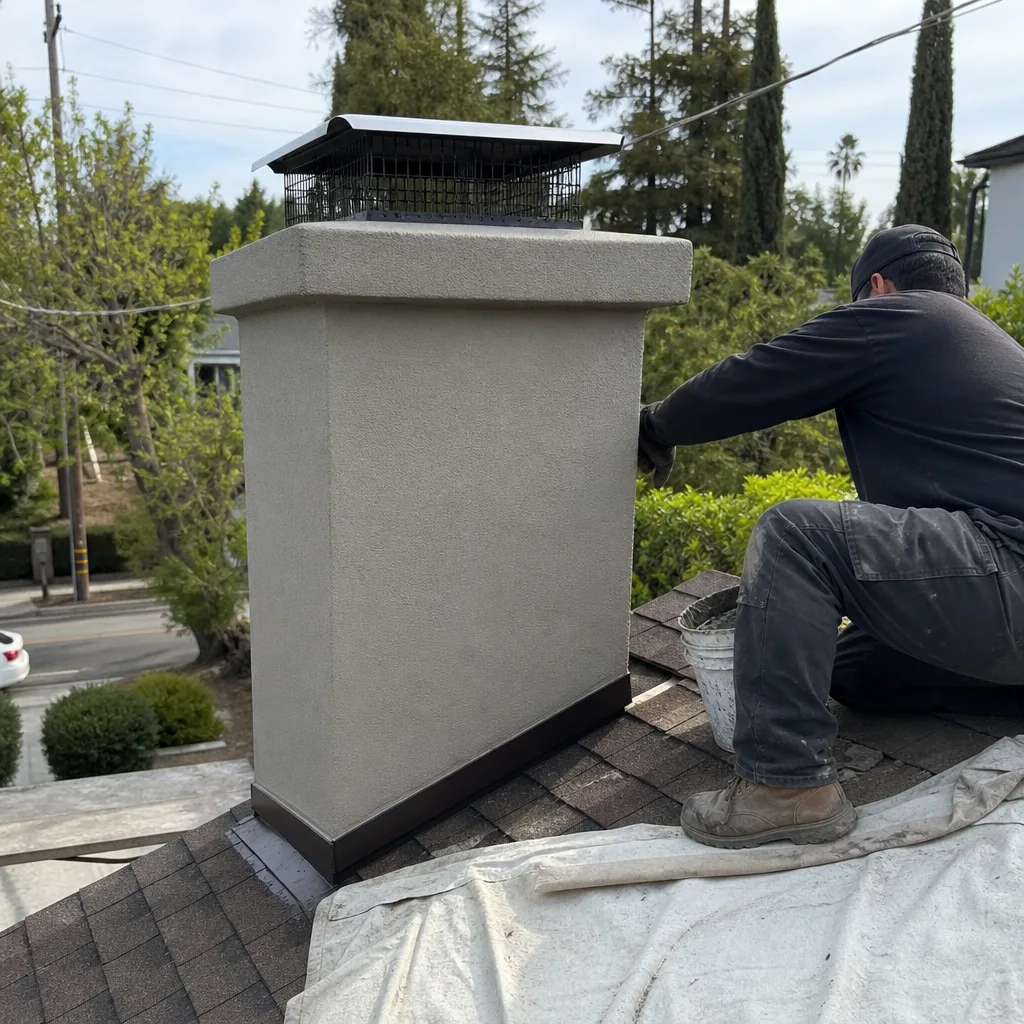 After
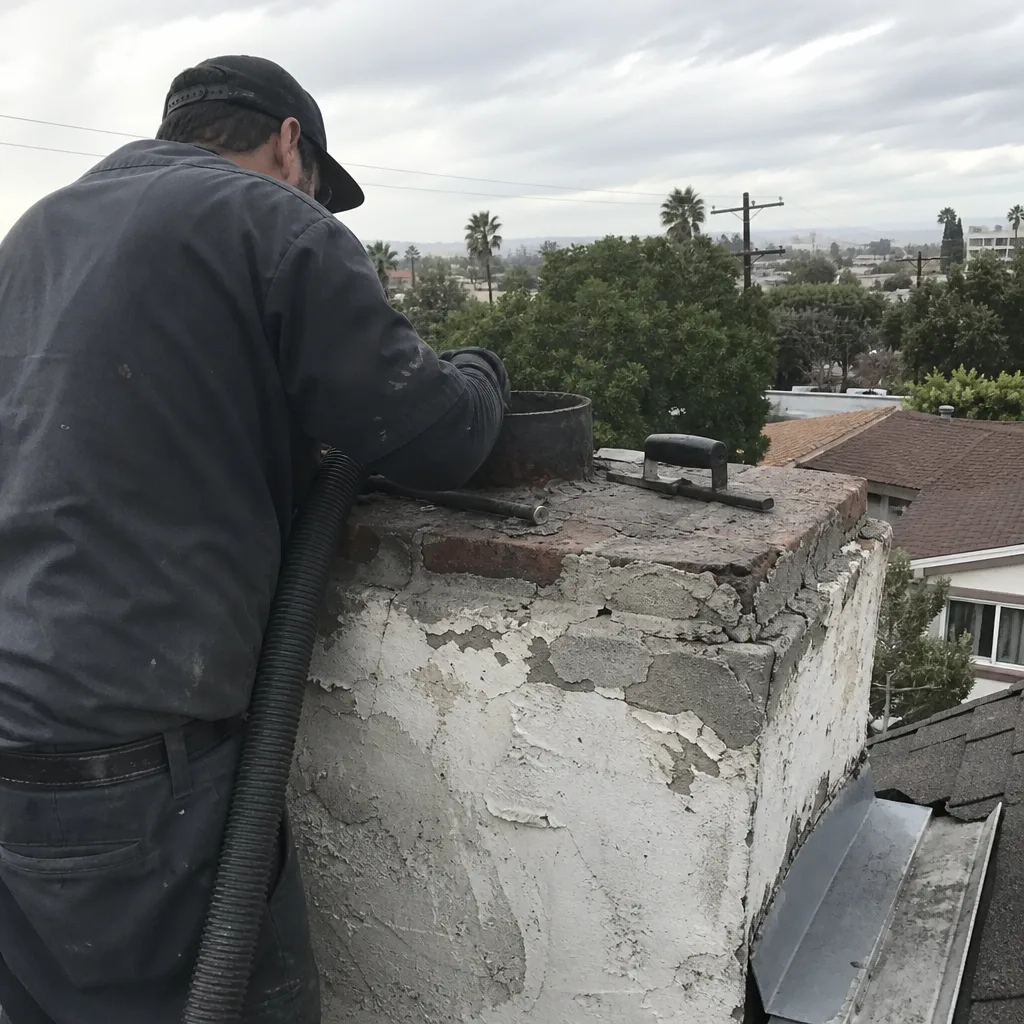 Before
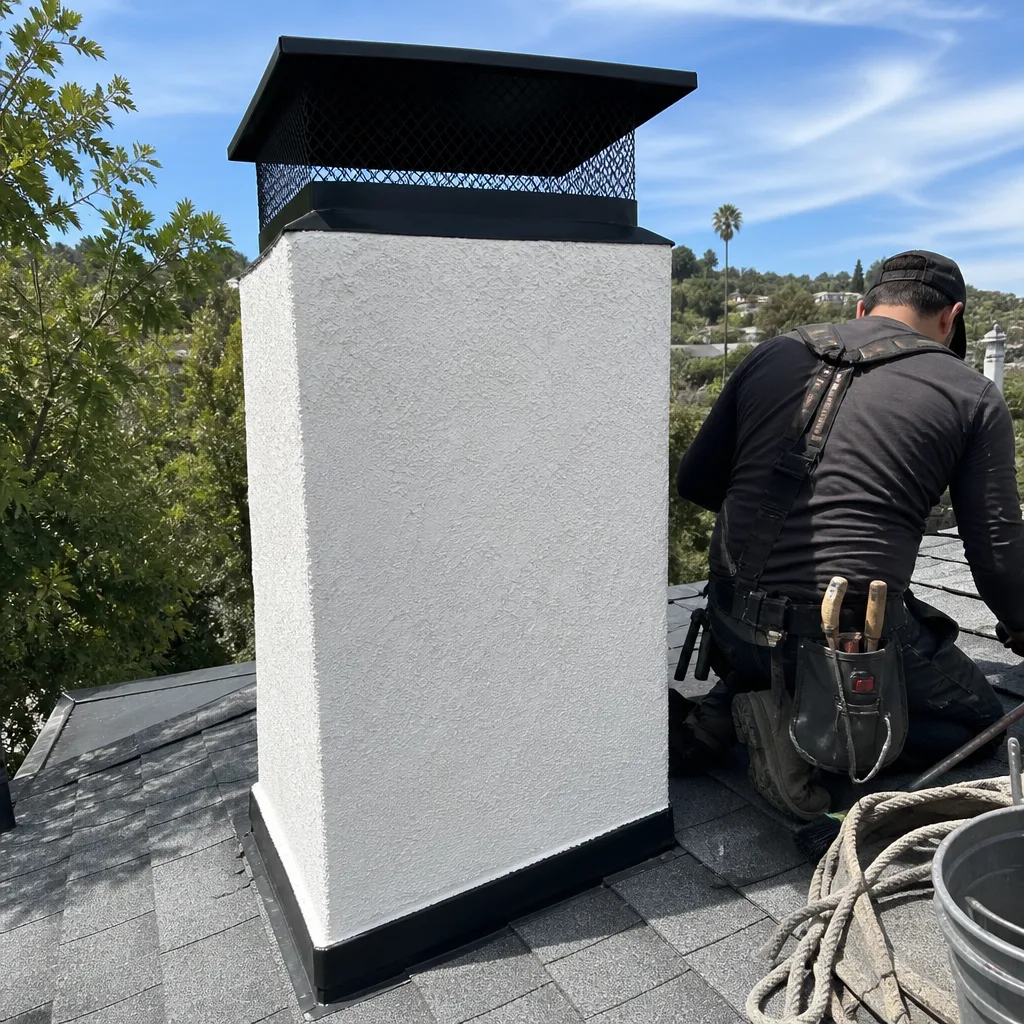 After
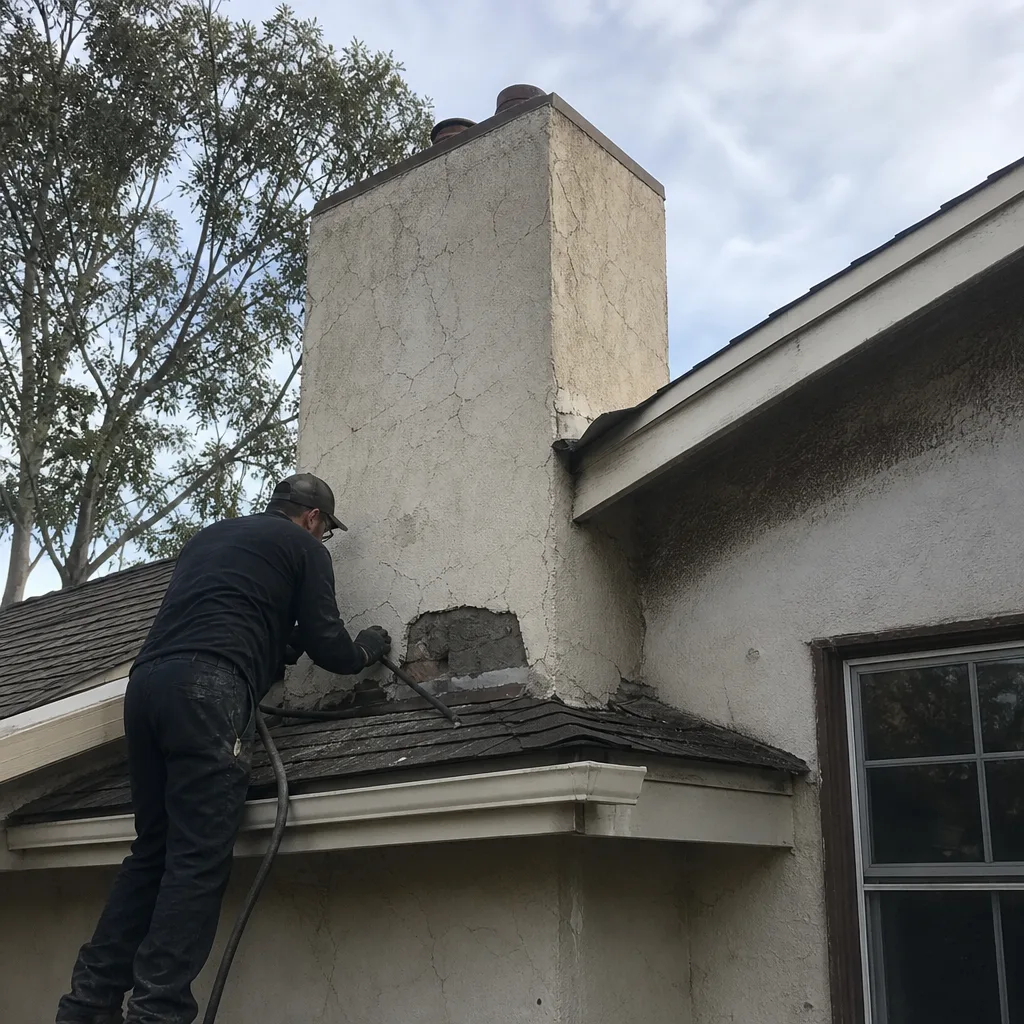 Before
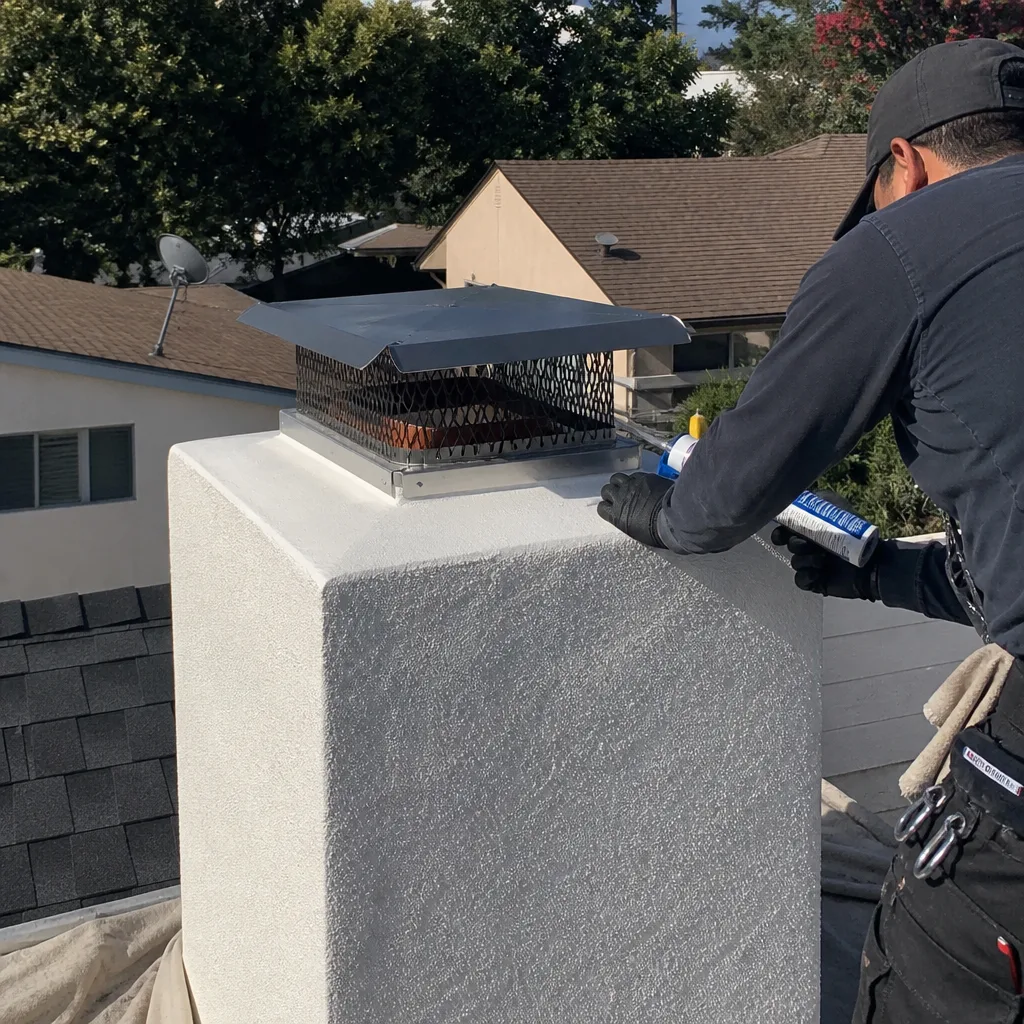 After
When to Call a Professional
Call a professional if you’ve had a chimney fire, even a minor one. Call after any earthquake strong enough to make you wonder. Call if your CO detector has gone off and been cleared by the fire department, but the source remains unexplained. Call if you smell smoke in the house when no fire is burning. Call if you see water stains, efflorescence, or crumbling mortar anywhere on the chimney structure. Call if it’s been more than a year since the last sweep and you’re about to start burning season. Call if you just bought a home in Atwater Village with a fireplace and the previous owner left no maintenance records. In any of these situations, the inspection is the answer, and the cost of the inspection is always less than the cost of the event it prevents. Pearl Chimney Cleaning offers free estimates in Atwater Village and covers the full scope, sweep, dryer vent, and repair, so you’re not coordinating three contractors for one combustion safety problem. Call (833) 630-4048.
Frequently Asked Questions
Once a year is the standard recommendation from the National Fire Protection Association, and that applies to both wood-burning and gas fireplaces in Atwater Village. If you burn more than three cords of wood per season, you may need a mid-season sweep. Gas fireplaces produce less creosote but still accumulate dust, debris, and mineral deposits that need annual clearing.
Most people describe it as a freight train rumble, a low roar, or a loud crackling coming from the flue. Some hear a series of small pops like heavy rain hitting a metal roof. The sound is distinct from normal fire sounds, and if you hear it, follow the 90-second protocol: close the damper, close the doors, evacuate, call 911.
Not until it’s been inspected. An earthquake small enough to leave no visible damage can still crack a clay flue liner, and a cracked liner is a fire and CO hazard. The inspection is quick, the camera footage is definitive, and the peace of mind is worth far more than the service call.
Yes. Chimney caps keep out rain, birds, squirrels, leaves, and embers. In wildfire season, an uncapped flue is a receiving point for wind-driven embers. In the rainy season, an uncapped flue lets water directly into the firebox and smoke chamber. A cap is one of the least expensive and most protective upgrades you can make.
Both are exhaust paths for combustion byproducts. A clogged dryer vent can cause a house fire, and a blocked chimney can cause CO poisoning. Treating them as separate problems leaves a gap in your household safety plan. Dryer Vent Cleaning in Atwater Village addresses one of the most common and most overlooked fire hazards in the home.
We install components from DuraFlex, HeatShield, Gelco, Olympia Chimney, and Copperfield. These are the products chimney professionals specify when they’re working on their own homes, not generic substitutes from a hardware shelf. The materials matter, and we’re transparent about what goes into every repair.
The Bottom Line
Chimney emergencies in Atwater Village break into three categories: chimney fires, carbon monoxide events, and post-earthquake structural damage. Each has a specific response sequence, and the common thread is that preparation beats improvisation. Know your damper. Maintain your CO detectors. Get a cap on your flue. Have a baseline inspection on file. After any event, stop using the fireplace until a professional has cleared it. The chimney is part of your home’s combustion system, and it deserves the same attention as your electrical panel or your gas line. A clean flue, a sound liner, and a documented inspection are not luxury upgrades. They’re the minimum standard for a safe home.
Written by the team at Pearl Chimney Cleaning, serving Atwater Village since 2013.
Ready to build your emergency foundation? Call Pearl Chimney Cleaning at (833) 630-4048 for a free estimate on a sweep, inspection, or repair. We serve Atwater Village and the surrounding Los Angeles area.